
If you've ever bought or used a hole saw, you've probably come across the term "Bi-Metal." It sounds impressive—but what does it actually mean? And why do bi-metal hole saws last longer, cut faster, and handle tougher materials than regular hole saws?
In this article, we'll break down everything you need to know about bi-metal hole saws, from how they're made to why they outperform standard hole saws in almost every way.
What Exactly Is "Bi-Metal"?
Let's clear this up right away: "Bi-metal" is not a new type of metal. It's a material combination process.
A bi-metal hole saw is made from two different metals, each chosen for its specific strength, and permanently bonded together:
-
The teeth (cutting edge): High-Speed Steel (HSS)
This is an extremely hard, wear-resistant tool steel designed specifically for cutting. In high-quality bi-metal hole saws, the HSS also contains about 8% cobalt, which helps the teeth retain their hardness even at high cutting temperatures—so they stay sharp much longer. -
The body (cup/base): Alloy steel or spring steel
This is a tough, flexible steel that acts as the "skeleton" of the hole saw. It's not as hard as the teeth, but it absorbs shock and vibration, preventing the saw from cracking or shattering under pressure.
In plain terms: the teeth are made from the hardest steel possible to stay sharp and cut efficiently, while the body is made from the toughest steel possible to handle impact and torque.
These two metals are joined together through advanced processes like electron beam welding, creating a single, durable cutting tool that combines the best of both worlds.
Why Are Bi-Metal Hole Saws More Durable Than Standard Ones?
Standard hole saws (such as carbon steel hole saws) are usually made from a single type of steel—which means they have to compromise. Either they're hard but brittle, or tough but soft. Bi-metal construction solves these core problems in several key ways:
1. Exceptionally Wear-Resistant Teeth for Extended Tool Life
The teeth on a bi-metal hole saw are made from high-speed steel (HSS)—a material designed to withstand heavy abrasion. With the addition of cobalt, these teeth also resist heat softening. That means even when you're cutting through metal and friction generates high temperatures, the cutting edge stays sharp much longer than standard carbon steel teeth.
SEO keyword takeaway: durable hole saw, long-lasting hole saw, HSS hole saw teeth
2. Impact-Resistant Body That Won't Shatter
What's the #1 fear when cutting holes? Hitting a nail.
A regular hole saw—especially one made entirely from hard but brittle steel—will often snap or crack its teeth when it hits a hidden nail, screw, or rebar. But a bi-metal hole saw's flexible steel body absorbs and distributes impact forces, protecting the teeth from sudden breakage.
This is why so many bi-metal hole saws are marketed as "designed to cut through wood embedded with nails, metal, and plastics."
SEO keyword takeaway: impact-resistant hole saw, hole saw for nails, rugged hole saw
3. Versatility – One Saw, Many Materials
Because the teeth are hard enough to cut metal, and the body is tough enough to absorb shock, a bi-metal hole saw is incredibly versatile.
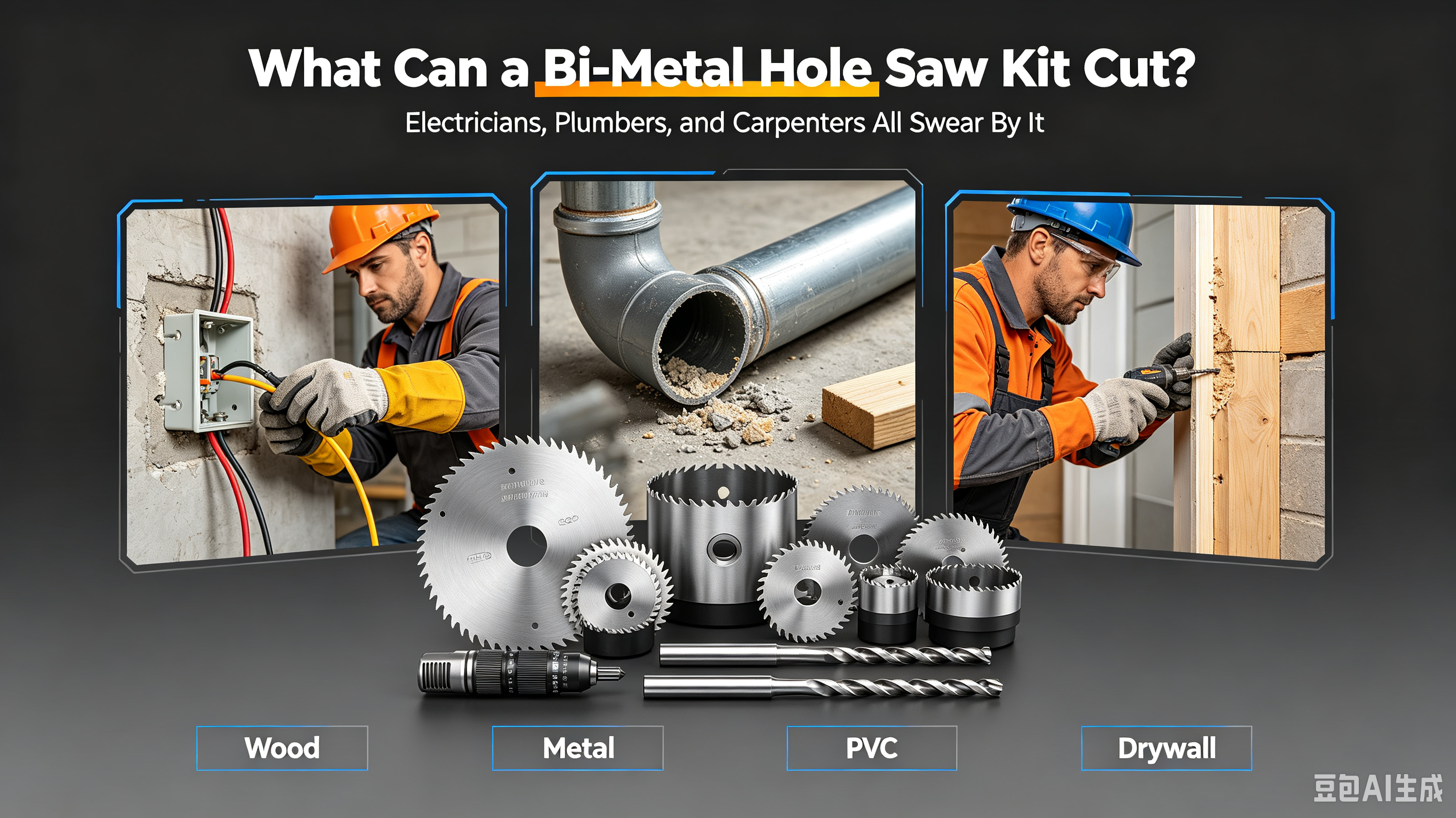
A good bi-metal hole saw can cut through:
-
Wood and plywood
-
Plastic and PVC
-
Drywall and plasterboard
-
Stainless steel, cast iron, and non-ferrous metals
For professionals and DIYers alike, this means one bi-metal hole saw can replace several standard hole saws—saving money and toolbox space.
SEO keyword takeaway: multi-material hole saw, versatile hole saw, hole saw for metal and wood
4. Greater Stability for Cleaner, More Accurate Holes
Durability isn't just about lasting longer—it's also about cutting better.
High-quality bi-metal hole saws are built with precise welding and careful alignment. This reduces runout (wobbling) and vibration during cutting, resulting in cleaner, rounder holes with less burring or tear-out. You spend less time cleaning up the hole and more time moving on to the next job.
SEO keyword takeaway: precision hole saw, clean cutting hole saw, low-vibration hole saw
Quick Summary: Bi-Metal vs. Standard Hole Saws
| Feature | Bi-Metal Hole Saw | Standard Hole Saw |
|---|---|---|
| Teeth Material | High-speed steel (HSS + cobalt) | Carbon steel or basic HSS |
| Body Material | Flexible alloy/spring steel | Same hard steel throughout |
| Heat Resistance | High (stays sharp longer) | Low (loses edge quickly) |
| Impact Resistance | High (absorbs shock) | Low (prone to cracking) |
| Materials Cut | Wood, metal, plastic, nails, etc. | Wood, plastic, light materials |
| Tool Life | Long | Shorter |
| Cut Quality | Cleaner, less vibration | More burring, more wobble |
The Bottom Line
A bi-metal hole saw = HSS (high-speed steel) teeth + a flexible alloy steel body.
It's not a "premium metal"—it's a smart engineering solution that combines two materials for maximum performance.
That's precisely why bi-metal hole saws outperform standard hole saws in durability, impact resistance, cutting speed, and material versatility.
Whether you're a professional contractor, an electrician, a plumber, or a serious DIYer, a good bi-metal hole saw is one of the smartest investments you can make for your toolbox. It'll handle the unexpected nails, cut through tough metals, and keep cutting cleanly long after a standard hole saw would be ready for the trash.