
If you've ever spent time on a jobsite or in a workshop, you've probably noticed that seasoned tradespeople almost always have a bi-metal hole saw kit in their toolbox. Electricians use them. Plumbers use them. Carpenters use them. Three completely different trades, yet they all rely on the same tool.
So what's the big deal? And more importantly—what can a bi-metal hole saw kit actually cut?
Let's break it down, trade by trade.
In One Sentence: Almost Everything
A bi-metal hole saw kit can cut through most common materials found on construction sites and in home renovation projects—including wood, metal, plastic, drywall, and more.
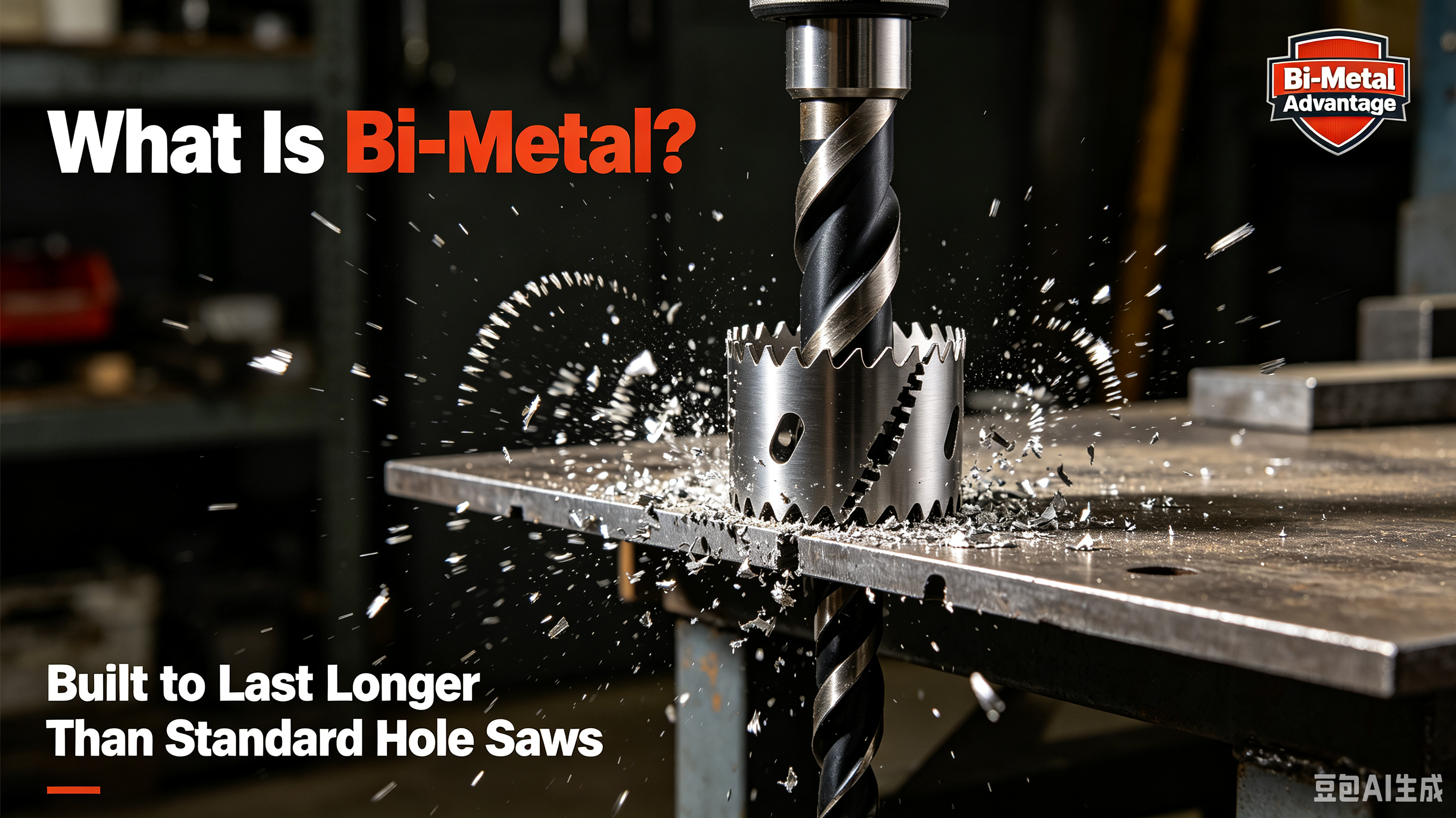
But here's the real kicker: it's not just about being able to cut these materials. It's about cutting them fast, clean, and consistently, without dulling or breaking. That's thanks to the bi-metal construction—cobalt-infused HSS teeth that stay sharp under heat, and a flexible alloy steel body that absorbs shock and prevents shattering.
What Do Electricians Cut With a Bi-Metal Hole Saw Kit?
Electricians are heavy users of hole saws. Installing wiring, running conduit, mounting outlets and junction boxes—every single day involves cutting holes.
Common Applications:
Electrical rough-in openings – Cutting holes in walls, ceilings, and electrical panels for conduit, cable, and junction boxes
Recessed lighting installation – Cutting clean circular openings in drywall or wood ceilings for can lights and fixtures
Running wire through wood framing – Drilling through wall studs, joists, and rafters to route electrical cables
Metal electrical box openings – Cutting through light-gauge metal enclosures and cable trays
Most common kit sizes for electricians:
7/8" (22mm), 1-1/8" (29mm), 1-3/8" (35mm) — these match standard conduit and junction box sizes.
What Do Plumbers Cut With a Bi-Metal Hole Saw Kit?
Plumbers work with water pipes, drainage systems, and ventilation ducts—which means drilling through all kinds of materials to get pipes where they need to go.
Common Applications:
Pipe pass-through holes – Cutting through walls, floors, and roofs to run PPR, PVC, copper, or stainless steel pipes
HVAC and vent installation – Opening holes in ductwork or building structures for ventilation pipes
Branching off existing pipes – Creating branch openings or access ports in piping systems
Most common kit sizes for plumbers:
1-1/2" (38mm), 1-3/4" (44mm), 2-1/4" (57mm), 2-5/8" (67mm) — sized to match standard pipe diameters.
What Do Carpenters Cut With a Bi-Metal Hole Saw Kit?
Carpenters work across the broadest range of materials—from rough framing to fine cabinetry—and hole saws are essential for both.
Common Applications:
Wood framing penetrations – Drilling through joists, rafters, plywood, and OSB for wiring, pipes, and ductwork
Cabinet and furniture modifications – Cutting access holes in cabinet backs or side panels for plumbing and electrical connections
Hardware installation – Drilling clean circular recesses for door locks, hinges, pulls, and other hardware
Engineered wood products – Cutting through particleboard, MDF, and melamine during assembly and installation
What carpenters love most: A bi-metal hole saw can cut straight through nails embedded in wood. Standard carbon steel hole saws will shatter or lose teeth the moment they hit a hidden nail. Bi-metal hole saws? They power through—thanks to those super-hard HSS teeth and the flexible body that absorbs the shock.
What Else Can a Bi-Metal Hole Saw Kit Cut?
Beyond the "core" materials used by these three trades, a bi-metal hole saw kit handles a wide variety of other materials:
|
Material Category |
Specific Examples |
|
Ferrous Metals |
Steel, stainless steel, cast iron |
|
Non-Ferrous Metals |
Aluminum, brass, copper |
|
Plastics |
PVC pipes, plastic panels, acrylic sheets |
|
Drywall & Plaster |
Gypsum board, plasterboard, ceiling tiles |
The Only Thing It CANNOT Cut
Don't use a bi-metal hole saw on concrete, brick, stone, or ceramic tile.
Those materials require carbide-tipped or diamond core bits. As tough as bi-metal teeth are, they can't handle the extreme abrasiveness of masonry and ceramics. That's a job for a different tool.
Which Kit Should You Choose?
If you only want one set for general jobsite use, a General Purpose Kit is your safest bet—covering sizes from 19mm up to 64mm.
But if your trade is clearly defined:
|
Trade |
Recommended Kit |
Key Sizes |
|
Electrician |
Electrician Kit |
7/8" ~ 2-1/2" (common conduit sizes) |
|
Plumber |
Plumber Kit |
7/8" ~ 2-5/8" (standard pipe diameters) |
|
Carpenter / Remodeler |
General Purpose or Large-Diameter Kit |
Broad range, including large openings |
The Bottom Line
Electricians, plumbers, and carpenters all swear by bi-metal hole saw kits—not because they're "versatile," but because they actually deliver. Wood, metal, plastic, drywall, old lumber full of nails—one kit handles it all, without wrecking your tool or your budget.
The only hard rule: keep it away from concrete and tile.
Everything else? Cut with confidence. It can take it.