
When you think about spray painting, it's easy to assume that the cost is mostly about the paint itself. But the reality is far more complex. Whether you're coating industrial equipment or giving your car a fresh new look, the money goes to a lot of places you probably never considered. Today, we're breaking down the spray painting cost structure in full detail.
The Visible Material Costs Are Just the Tip of the Iceberg
The most obvious cost in any painting project is the paint and related consumables. But the price variation here can be massive — enough to make you question everything you thought you knew about painting costs.
In the industrial painting sector, the cost gap between liquid paint and powder coating is striking. For example, a real-world case from an energy storage company shows that polyurethane paint costs approximately $2.10 per square meter** (including primer and topcoat), while epoxy powder coating costs only about **$0.77 per square meter. That's nearly a threefold difference — mainly because liquid paint has a lower solid content and requires multiple coats.
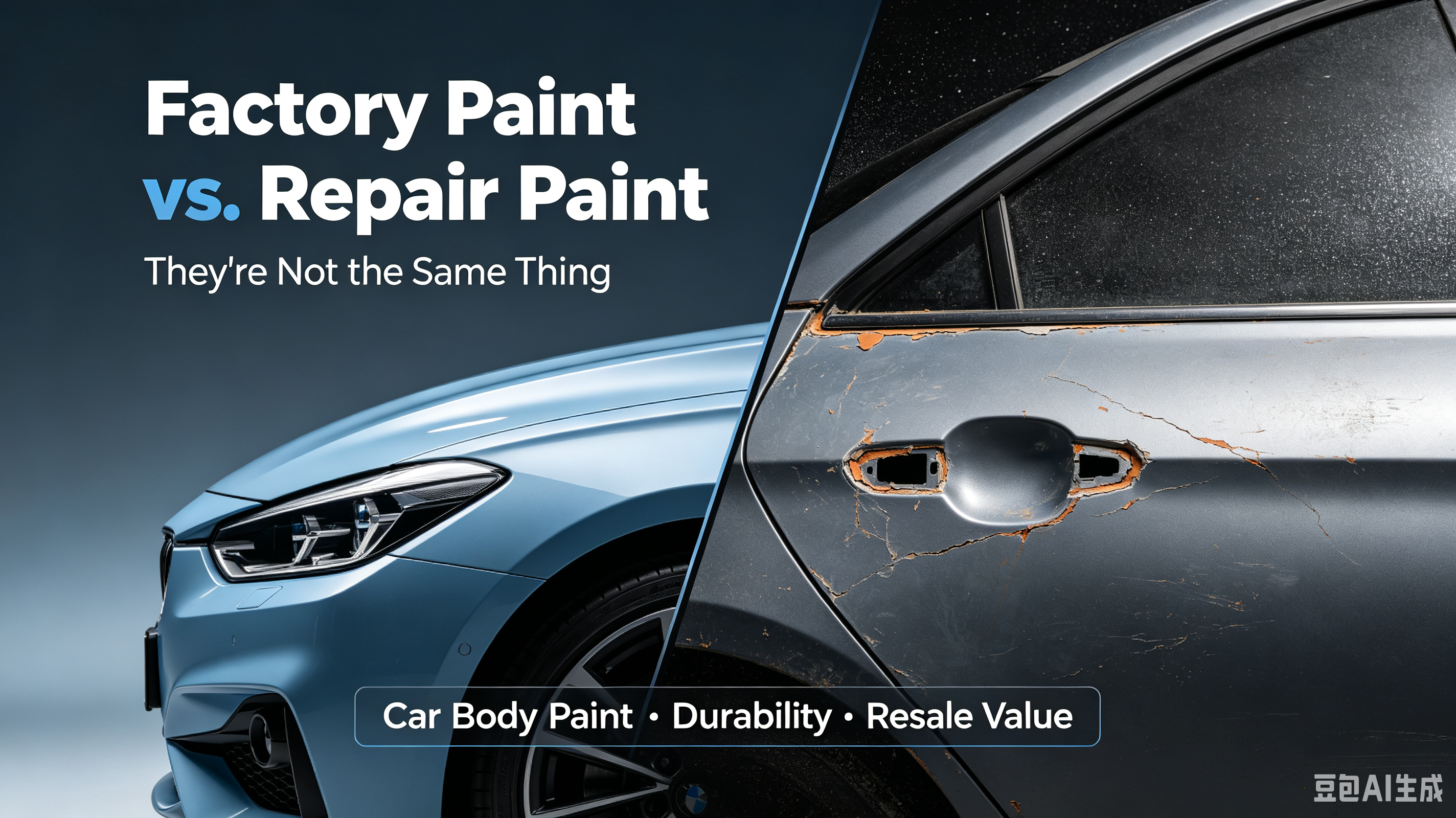
The automotive painting cost difference is even wider. For a full car respray, the material cost for standard solid paint ranges from $150 to $350, while metallic paint costs $250 to $550, and pearlescent paint can set you back $350 to $850. If you go to a dealership using premium paint brands like DuPont, the material cost alone can exceed $170 per panel.
The variation across vehicle classes is also significant. In some regional markets, a full respray for an economy car might cost around $170**, while a mid-range vehicle would be **$550–$700**, and a luxury car could exceed **$1,000.
The Hidden Cost Black Holes Most People Ignore
Material costs are just the beginning. The real budget killers are often the costs you never see coming.
1. Material Waste Is Staggering
In industrial spray painting, to ensure uniform film thickness, the spray gun must extend 1–3 spray positions beyond the part's edges. Add in irregular shapes, curves, and complex geometries — and over 60% of the paint never actually lands on the part. If you're hand-spraying, the waste is even worse.
2. Yield Loss Is the Silent Profit Killer
The painting environment is extremely sensitive to humidity, temperature, and dust levels. Defects like bubbles, orange peel, pinholes, and runs lead to a minimum 15% reject rate. And rework costs are roughly three times the original process cost. In one precision coating factory, a high-gloss product with only a 92% yield rate meant that to produce 100 good parts, they actually had to process 103 units' worth of workload.
3. Color-Change Costs Are Wildly Underestimated
In large paint shops, every color change generates significant paint and solvent consumption. At major automotive plants, annual color-change consumable costs often exceed $140,000. In a high-mix, low-volume production environment, this is a massive and often overlooked burden.
Labor Costs and "The Invisible Services"
In the automotive painting industry, labor costs often exceed material costs — because you're paying for skill, environment, and long-term durability.
In major cities, labor for a full respray on a standard car typically costs around $550–$700, and luxury vehicles can push $1,000 or more. Dealership labor rates are generally double or more than independent body shops.
So what are you actually paying for? Higher labor costs translate to:
-
Climate-controlled painting booths (temperature- and humidity-regulated)
-
Multi-layer thickness control (ensuring even coverage and proper film build)
-
Sufficient flash-off and curing times between coats
-
Detailed prep work, such as removing handles and trim instead of just masking them off (which can add $30–$70 for the extra labor)
All of these factors dramatically extend the process time — but they also determine the final finish quality and how long that paint job will last.
The Full Breakdown: Where Does Your Money Actually Go?
Let's run the numbers for a standard family sedan getting a full metallic respray at a reputable body shop:
| Cost Component | Estimated Cost (USD) |
|---|---|
| Dent repair (if needed) | $15–45 per panel |
| Old paint stripping/sanding | $30–70 |
| Primer application | $30–55 |
| Base coat (2–3 layers) | $70–210 |
| Clear coat | $40–85 |
| Baking/curing | $15–45 |
| Polishing and finishing | $30–55 |
Total for a full respray typically falls between $210 and $560. At a dealership, that number can easily double to $850–$1,100+ for a standard car.
Final Thoughts: The Real Cost of Painting
The painting cost structure is far more complex than most people realize. Materials are only the starting point. The real costs are hidden in material waste, yield loss, strict process requirements, and the labor of skilled technicians.
For Car Owners:
Don't just look at the cheapest quote. Ask what's included — the quality of paint, the number of coats, whether trim is removed or masked, the curing process, and the warranty on the finish.
For Manufacturers:
Address painting requirements early in the design phase. Unrealistic or overly strict finishing specs can push coating costs far beyond the value of the material itself.
Next time you see a painting estimate, you'll actually know where every dollar is going. And that knowledge alone can save you a fortune.