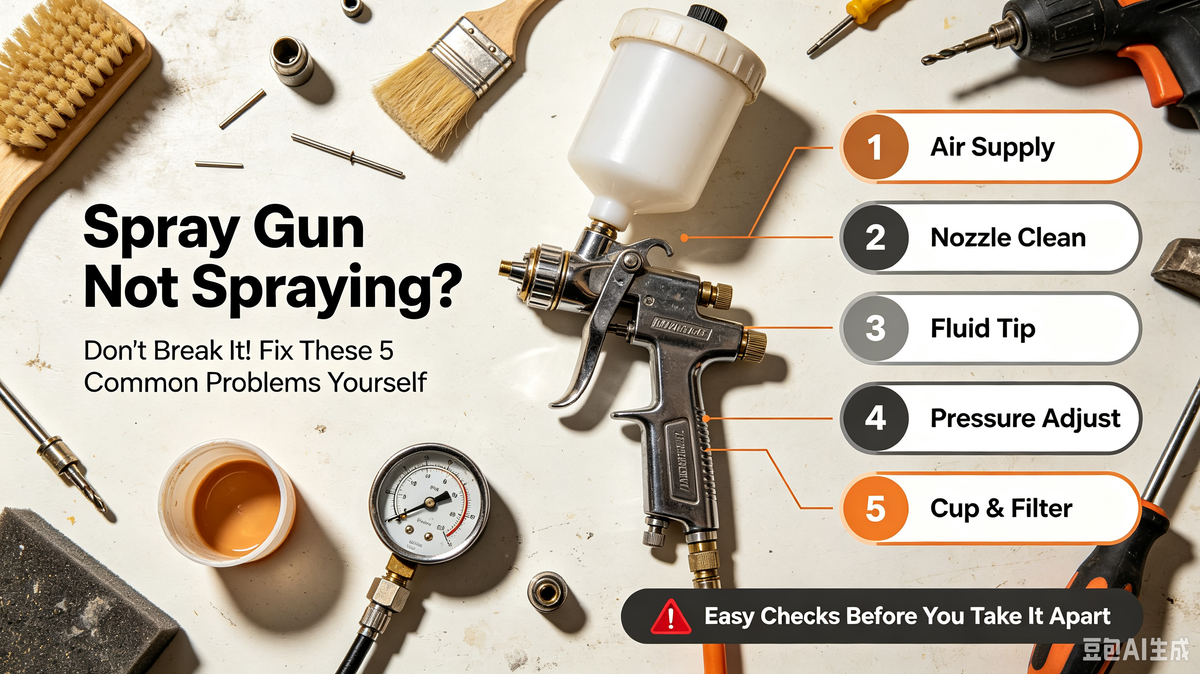

Why Is Your Spray Gun Getting Harder to Use?
Many DIY users have the same experience: a new spray gun delivers smooth atomization at first, but after several projects, it starts to clog, spray unevenly, drip from the gun head, or produce a distorted spray pattern.
In many cases, the problem is not the spray gun itself. It is usually caused by dried paint, clogged nozzles, worn sealing rings, poor cleaning habits, or improper storage.
A spray gun is a precision tool. Whether you use it for furniture refinishing, fence painting, wall coating, cabinet projects, wood finishing, or home DIY painting, regular maintenance can help keep the sprayer working smoothly for years.
In this guide, we will cover three key spray gun maintenance steps: cleaning after every use, inspecting wear parts, and storing the spray gun properly.
Step 1: Clean the Spray Gun Immediately After Every Use
This is the most important step in spray gun maintenance. Paint, varnish, stain, primer, or clear coat can dry inside the nozzle, air cap, cup connection, and fluid passage. Once material hardens inside the sprayer, it can cause clogging, uneven spray output, spitting, or a poor spray pattern.
If you use an electric HVLP paint sprayer, clean it as soon as you finish spraying. Do not leave paint sitting inside the cup or nozzle.
Basic 5-Minute Cleaning Process
- Empty the remaining paint. Pour unused paint back into the container if it is still clean and usable.
- Rinse the paint cup. Use warm water for water-based materials or the recommended thinner for solvent-based materials.
- Flush the sprayer. Add a small amount of cleaning liquid to the cup and spray a few short bursts until the liquid runs clearer.
- Remove the nozzle and key parts. Follow the sprayer manual and remove the nozzle, cup, and removable parts that need cleaning.
- Clean gently. Use a soft brush or cleaning needle to remove paint from the nozzle opening and air holes.
- Dry before storage. Wipe parts dry and let them air dry before reassembling.
Never use hard wire, nails, or sharp metal objects to clean precision nozzle holes. Scratching or enlarging the nozzle opening can affect atomization and spray pattern quality.
Cleaning Tip for Easier Color Changes
If you often switch between colors or finishes, keeping extra paint cups can make the process easier. A replacement paint sprayer canister set can help reduce downtime when moving between different materials or preparing for the next project.
Recommended for Easier Cleanup and Color Changes
Extra paint canisters are useful when you need to switch between colors, prepare different materials, or replace an old cup. They are especially helpful for DIY users who paint furniture, fences, cabinets, doors, and home projects regularly.
View HYCHIKA Paint Sprayer CanistersStep 2: Inspect and Replace Wear Parts Regularly
A spray gun includes several wear parts. These parts directly affect paint flow, sealing performance, and spray pattern quality. If your spray gun suddenly performs poorly, do not throw it away immediately. In many cases, replacing the nozzle or sealing ring can restore normal performance.
| Wear Part | Function | Signs of Wear | What to Do |
|---|---|---|---|
| Nozzle | Controls material flow and atomization | Uneven spray, clogging, spitting, poor atomization | Clean first; replace if worn, blocked, or damaged |
| Sealing Ring / O-Ring | Helps prevent paint or air leaks | Paint leaking, air leaking, loose cup connection, dripping | Replace if cracked, hardened, swollen, or deformed |
| Paint Cup | Holds paint or coating material | Cracks, poor sealing, stains, dried paint buildup | Replace when damaged or difficult to clean |
| Air Cap / Spray Head Area | Shapes the spray pattern | Distorted fan pattern, uneven side spray, clogged holes | Clean carefully and inspect for damage |
When Should You Replace the Nozzle?
The nozzle is one of the most important parts of a spray gun. If it becomes blocked, scratched, worn, or damaged, your spray pattern can become uneven. You may notice spitting, heavy spots, poor atomization, or paint coming out in an irregular pattern.
For compatible HYCHIKA 600W HVLP sprayers, an HVLP paint sprayer nozzle set can be useful for replacing worn or blocked nozzles and adapting the sprayer to different paint materials.
Recommended Replacement Nozzles
The HYCHIKA HVLP Paint Sprayer Nozzle Set includes multiple nozzle sizes for compatible HYCHIKA 600W HVLP paint sprayers. It is useful for replacing worn, blocked, or damaged nozzles and adjusting the sprayer for different coating materials.
View HYCHIKA HVLP Nozzle SetWhen Should You Replace the Sealing Ring?
Sealing rings are small, but they are important. A worn or damaged sealing ring can cause leaking, dripping, poor pressure, or messy operation. Thin liquids such as wood dye, shellac, sanding sealer, and clear coat can be especially likely to leak through weak sealing points.
If you notice dripping near the cup, gun head, or connection area, check the sealing ring first. A spray gun sealing ring set is a useful spare part to keep nearby, especially if you use your sprayer often.
Recommended Spare Sealing Rings
Keep spare sealing rings ready if you use your spray gun for thin liquids or frequent DIY painting projects. Replacing a worn sealing ring can help reduce leaking and keep the sprayer easier to control.
View HYCHIKA Sealing Ring SetStep 3: Store the Spray Gun Properly
Cleaning is not the final step. How you store the spray gun also affects its long-term performance. A clean but poorly stored sprayer can still develop corrosion, stuck parts, damaged seals, or dust buildup.
1. Dry All Parts Before Storage
After cleaning, make sure the cup, nozzle, spray head, and removable parts are fully dry. Moisture left inside the sprayer can affect metal parts and may cause residue buildup.
2. Avoid Long Solvent Soaking for Rubber Parts
Do not leave rubber seals or O-rings soaking in strong solvents for long periods. Some solvents can cause rubber parts to swell, harden, or crack. Clean them gently and dry them separately.
3. Keep the Nozzle Protected
The nozzle and spray head area should be protected from impact. Do not throw the sprayer loosely into a toolbox where the nozzle can hit other tools. A damaged nozzle can affect spray quality even if the motor still works.
4. Store in a Clean, Dry Place
Dust, moisture, and dried paint residue can shorten the life of your spray gun. Store the sprayer in a dry location, away from heavy objects, direct heat, and dirty workbench areas.
Common Spray Gun Problems and Maintenance Fixes
| Problem | Possible Cause | Maintenance Fix |
|---|---|---|
| Spray pattern is uneven | Clogged nozzle or air cap | Clean nozzle and spray head carefully; replace nozzle if damaged. |
| Paint drips from the gun head | Loose connection or worn sealing ring | Check connections and replace sealing ring if needed. |
| Sprayer spits paint | Dried material inside nozzle or poor material flow | Flush sprayer, clean nozzle, and strain paint before use. |
| Paint cup is hard to clean | Dried paint buildup or old material residue | Soak with suitable cleaner and consider replacing old cups. |
| Poor atomization | Wrong nozzle size, clogged nozzle, or material too thick | Check viscosity, choose the right nozzle, and clean or replace worn parts. |
Maintenance Checklist Before Every Project
Before using your spray gun, spend one minute checking these items:
- Is the nozzle clean and undamaged?
- Is the sealing ring in good condition?
- Is the paint cup clean and tightly connected?
- Is the material properly mixed and filtered?
- Is the spray pattern even during the test spray?
This quick check can prevent many common problems before they affect your final finish.
Useful Accessories to Keep on Hand
If you use your spray gun regularly, it is smart to keep common replacement parts and accessories ready. This helps you avoid stopping a project because of a clogged nozzle, leaking seal, or damaged cup.
- HVLP paint sprayer nozzle set for replacing worn or blocked nozzles.
- Spray gun sealing ring set for leaks and sealing issues.
- Replacement paint sprayer canisters for cleaner color changes and cup replacement.
- 1.2mm nozzle tip for thin liquids such as wood dye, thin varnish, shellac, and sanding sealer.
Recommended Spray Gun Maintenance Parts
Keep your sprayer ready for the next project with replacement nozzles, sealing rings, and extra paint cups. These small accessories can help solve common problems such as clogging, leaking, poor spray pattern, and messy color changes.
View Nozzle Set View Sealing Rings View Paint CanistersFAQ: Spray Gun Maintenance
How often should I clean my spray gun?
Clean your spray gun immediately after every use. Even a short delay can allow paint or coating material to dry inside the nozzle and fluid passage.
Why is my spray gun clogging?
Common causes include dried paint inside the nozzle, paint that was not filtered, material that is too thick, or a nozzle that is worn or damaged.
When should I replace the spray gun nozzle?
Replace the nozzle if cleaning no longer restores the spray pattern, if the nozzle is visibly damaged, or if the sprayer continues to spit, clog, or spray unevenly.
Why is my spray gun leaking?
Leaks are often caused by loose connections, damaged cup threads, or worn sealing rings. Check the cup connection and replace the sealing ring if it is cracked, hardened, swollen, or deformed.
Can I soak all spray gun parts in solvent?
Do not soak rubber seals or O-rings in strong solvents for long periods. Some solvents can damage rubber parts. Clean them gently and follow the sprayer and coating manufacturer’s instructions.
Final Verdict: Good Maintenance Keeps Your Spray Gun Working Better
A spray gun can stay reliable for a long time if it is cleaned, inspected, and stored properly. The three most important habits are simple: clean it immediately after every use, replace worn parts before they cause bigger problems, and store the sprayer in a clean, dry place.
For everyday DIY painting, furniture refinishing, fence spraying, wall coating, and home improvement projects, the HYCHIKA 600W HVLP Paint Sprayer is a practical electric HVLP option. To keep it performing well, keep replacement parts such as the HYCHIKA HVLP Paint Sprayer Nozzle Set, HYCHIKA Spray Gun Sealing Ring Set, and HYCHIKA Paint Sprayer Canisters ready for cleaning, repair, and replacement.
The better you maintain your spray gun, the more consistent your spray pattern, finish quality, and painting experience will be.
```