Introduction: Brushless or Brushed Drill Driver?
When buying a cordless drill driver, one of the most common questions is whether you should choose a brushless or brushed model. Both types can handle everyday drilling and screwdriving tasks, but they are different in motor design, power efficiency, maintenance, runtime, and price.
For home DIY users, the right choice depends on how often you use the drill, what materials you work with, and whether you care more about long-term performance or lower upfront cost.
In this guide, we will compare brushless vs brushed drill drivers in simple terms, explain the pros and cons of each type, and help you choose the right cordless drill for furniture assembly, home repair, woodworking, drilling, and screwdriving projects.
What Is a Brushless Drill Driver?
A brushless drill driver uses an electronically controlled motor instead of carbon brushes. This design helps reduce friction, heat, and energy loss during operation.
Because there are no brushes constantly rubbing inside the motor, brushless drills are usually more efficient, require less maintenance, and can provide smoother power delivery. This makes them a strong choice for users who want better runtime, longer tool life, and more consistent performance.
For many DIY users, a brushless cordless drill driver is a better long-term investment, especially for furniture assembly, woodworking, cabinet installation, home repairs, and regular weekend projects.
Advantages of Brushless Drill Drivers
- Better efficiency: Less energy is lost as heat, which can help improve runtime.
- Longer motor life: No carbon brushes means fewer parts that wear down over time.
- Smoother power delivery: Electronic control helps the motor adjust power more intelligently.
- Less maintenance: There are no brushes to replace.
- Better for frequent use: Ideal for users who plan to use their drill regularly.
Possible Downsides of Brushless Drill Drivers
- Higher price: Brushless drills usually cost more than brushed models.
- More advanced electronics: The design is more complex than a basic brushed motor.
Recommended Brushless Drill for Home DIY
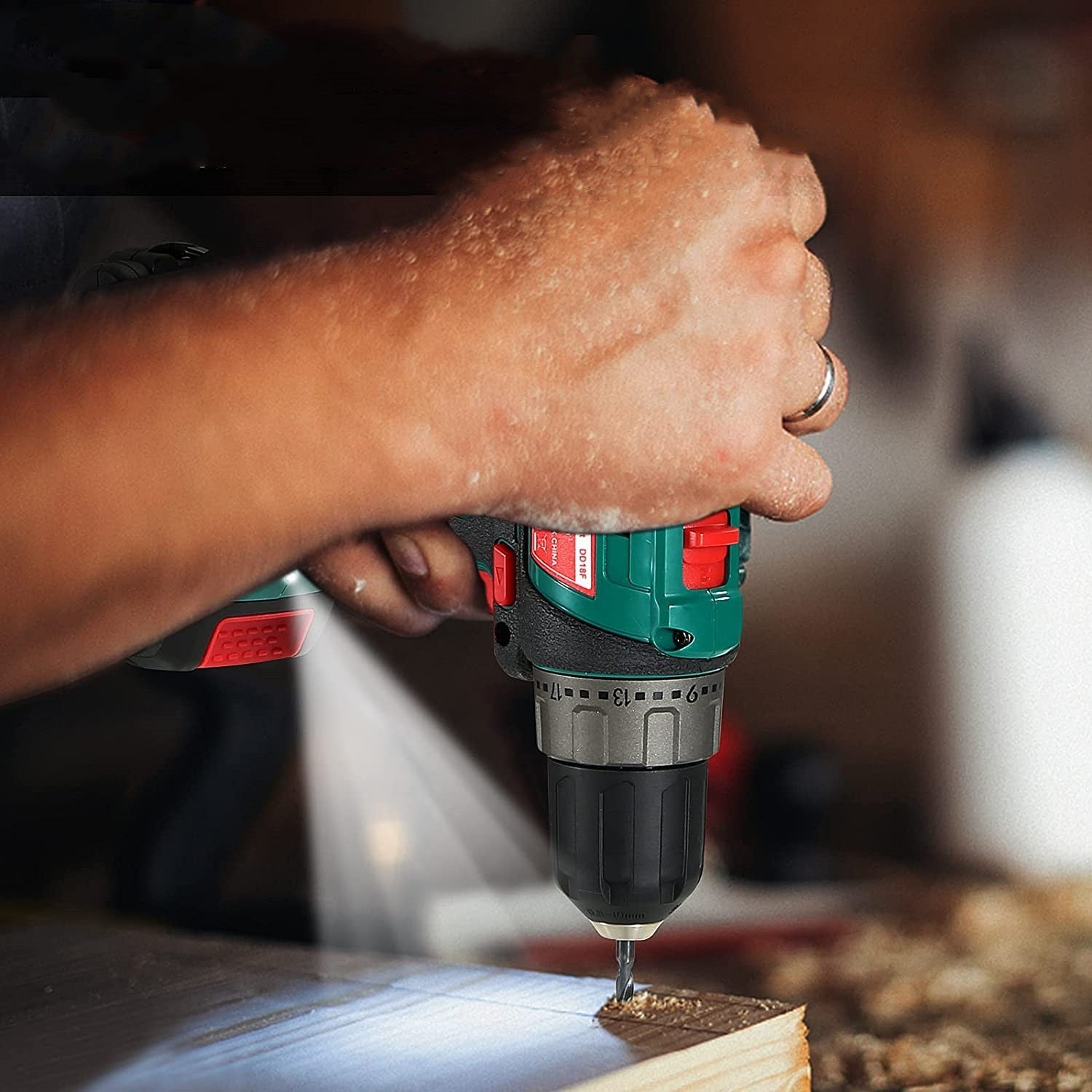
The HYCHIKA 16.8V Brushless Cordless Drill Driver Set is designed for home DIY, furniture assembly, drilling, screwdriving, and light repair tasks. With a brushless motor, 45Nm max torque, 2-speed control, 23+1 clutch settings, LED work light, and 53 included accessories, it is a practical choice for everyday household projects.
View HYCHIKA 16.8V Brushless Drill DriverWhat Is a Brushed Drill Driver?
A brushed drill driver uses carbon brushes to transfer electrical current to the motor. This is the traditional motor design used in many cordless drills for years.
Brushed drills are usually more affordable and simple in design. For users who only need a drill occasionally for light household tasks, a brushed drill can still be a practical option.
Advantages of Brushed Drill Drivers
- Lower upfront cost: Brushed drills are often more budget-friendly.
- Simple design: The motor structure is easier to understand.
- Good for occasional use: Suitable for light DIY tasks, simple repairs, and basic screwdriving.
- Wide availability: Many entry-level cordless drill kits use brushed motors.
Possible Downsides of Brushed Drill Drivers
- Less efficient: More energy may be lost as heat during operation.
- More wear over time: Carbon brushes can wear down with use.
- Shorter runtime: Compared with brushless models, brushed drills may drain the battery faster under similar use.
- More maintenance: Brushes may eventually need replacement.
If you are looking for a traditional cordless option for drilling, screwdriving, and general home maintenance, the HYCHIKA 18V brushed cordless drill driver can be considered as a budget-friendly alternative.
Brushless vs Brushed Drill Driver: Main Differences
| Feature | Brushless Drill Driver | Brushed Drill Driver |
|---|---|---|
| Motor Design | Uses electronic motor control without carbon brushes | Uses carbon brushes to transfer current to the motor |
| Efficiency | More efficient with less heat and energy loss | Less efficient because brushes create friction |
| Runtime | Usually better battery runtime | May use battery power faster |
| Maintenance | Lower maintenance because there are no brushes to replace | Brushes may wear down over time |
| Price | Usually higher upfront cost | Usually more affordable |
| Best For | Frequent DIY use, furniture assembly, woodworking, home repair | Occasional light tasks and budget-conscious users |
Which Drill Driver Should You Buy?
Choose a Brushless Drill Driver If You Use Tools Regularly
A brushless drill driver is the better choice if you plan to use your drill more than just a few times a year. It is especially useful for furniture assembly, cabinet installation, shelf mounting, woodworking, home improvement, and garage projects.
Because brushless motors are more efficient and require less maintenance, they are a smart choice for users who want a tool that feels more modern, runs more smoothly, and can handle repeated use.
For most homeowners and DIY enthusiasts, the HYCHIKA 16.8V Brushless Cordless Drill Driver Set is the stronger recommendation because it balances power, control, accessories, and everyday usability.
Choose a Brushed Drill Driver If You Only Need Basic DIY Use
A brushed drill driver can still be a good choice if your projects are simple and occasional. For example, if you only need to assemble furniture, tighten screws, drill small holes, or handle light repair tasks a few times a year, a brushed model may be enough.
The main reason to choose a brushed drill is budget. If price matters more than maximum efficiency or long-term motor life, a brushed cordless drill can still get the job done.
What Else Should You Consider Before Buying?
1. Torque
Torque affects how much twisting force the drill can deliver. Higher torque is useful for tougher drilling and fastening tasks. For home DIY, a cordless drill with around 35Nm to 45Nm can handle many common jobs such as wood drilling, furniture assembly, and screwdriving.
2. Speed Settings
A good drill driver should offer at least two speed ranges. Low speed gives better control for screwdriving, while high speed is better for drilling.
3. Clutch Settings
Clutch settings help control fastening force. More clutch settings make it easier to avoid over-tightening screws or damaging materials.
4. Battery and Charger
For cordless drills, battery capacity and charging time matter. A drill kit with a rechargeable battery and charger is more convenient for first-time buyers because you do not need to purchase the power source separately.
5. Accessories
Included drill bits, screwdriver bits, and extension accessories can make a drill kit more useful right out of the box. This is especially helpful for beginners who do not already own many accessories.
Best Drill Driver for Different DIY Users
| User Type | Recommended Choice | Reason |
|---|---|---|
| First-time homeowner | Brushless drill driver | Better long-term value and lower maintenance |
| Furniture assembly user | Brushless drill driver with clutch settings | Better control when tightening screws |
| Occasional light DIY user | Brushed drill driver | Lower price for basic tasks |
| Frequent weekend DIYer | Brushless cordless drill | Better efficiency, runtime, and durability |
Quick Recommendation
For most DIY users, a brushless drill driver is the better choice. It may cost more upfront, but it usually offers better efficiency, longer service life, smoother performance, and lower maintenance.
A brushed drill driver is still worth considering if you only need a tool for occasional light tasks and want to keep the initial cost lower.
Compare HYCHIKA Cordless Drill Options
Not sure which drill fits your project? Compare HYCHIKA cordless drill drivers, brushless drill sets, and brushed drill options for home repair, woodworking, furniture assembly, and everyday DIY tasks.
View All HYCHIKA Cordless DrillsFAQ: Brushless vs Brushed Drill Drivers
Is a brushless drill better than a brushed drill?
For most users, yes. A brushless drill is usually more efficient, requires less maintenance, and can offer better runtime. It is the better choice for frequent DIY use.
Are brushed drills still worth buying?
Yes. A brushed drill can still be useful for occasional light-duty tasks, especially if you are shopping on a tighter budget.
Do beginners need a brushless drill?
Beginners do not absolutely need a brushless drill, but it is a good choice if you want a tool that can grow with your projects. A brushless cordless drill driver is especially useful for homeowners, renters, and DIY users who expect to use the tool regularly.
What is the best drill driver for furniture assembly?
A cordless drill driver with adjustable clutch settings, two speed ranges, LED light, and a comfortable grip is ideal for furniture assembly. These features help improve control and reduce the risk of over-tightening screws.
Final Verdict: Brushless Is Better for Long-Term DIY Use
When comparing brushless vs brushed drill drivers, the best choice depends on your budget and how often you use the tool.
Choose brushed if you only need a simple drill for occasional light projects. Choose brushless if you want better efficiency, smoother operation, longer motor life, and a more capable tool for regular DIY work.
For home repair, furniture assembly, woodworking, drilling, and screwdriving, the HYCHIKA 16.8V Brushless Cordless Drill Driver Set is a practical option for most DIY users. You can also compare all HYCHIKA cordless drill drivers to choose the model that best fits your project.