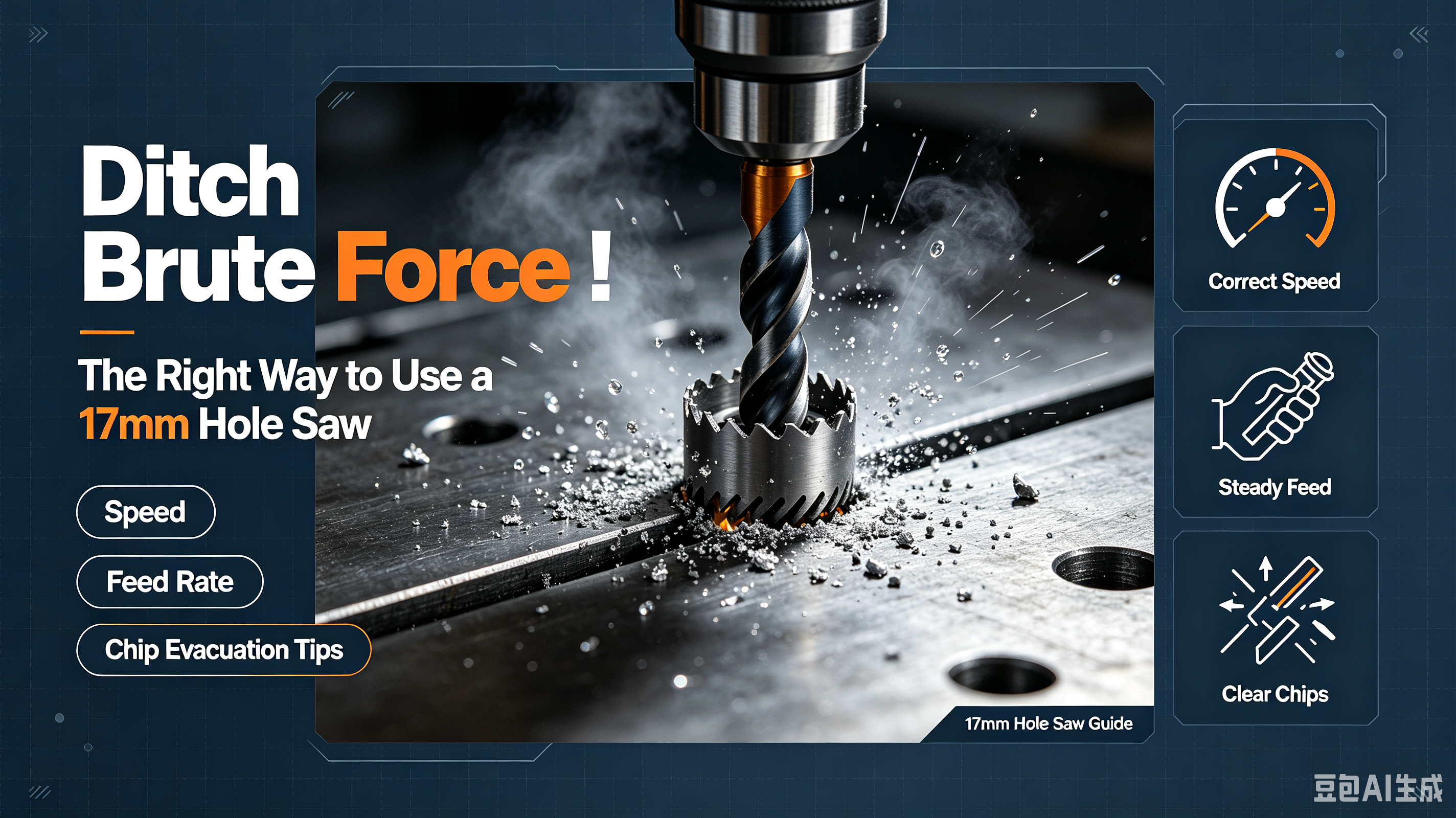

Carbide vs Bi-Metal: 17mm Small Hole Saw "Material Showdown" – Who Is the True Durability King?
In the world of power tool accessories, the 17mm hole saw may seem small and unassuming, but it's a high-frequency workhorse for electricians, plumbers, and installation technicians. Whether it's drilling a wire pass-through or opening a pipe access point, this little tool gets called into action almost every day.
Faced with the two mainstream options on the market — Carbide (TCT) and Bi-Metal hole saws — which one lasts longer? Which one truly deserves the title of "King of Hole Cutting"?
Today, we're putting these two materials head-to-head in a no-holds-barred comparison to uncover the real story behind their performance.
Bottom Line: Which One Is Right for Which Job?
Short on time? Here's the direct answer:
Carbide Hole Saw = Special Forces for Tough Materials (stainless steel, ceramic tile, fiberglass, cast iron)
Bi-Metal Hole Saw = Versatile All-Rounder (wood, plastic, mild steel, thin sheets)
There's no absolute "better" — only "better suited" for the task at hand.
Material Showdown: Hardness vs. Toughness – You Can't Have Both
At its core, this matchup is a battle between hardness and toughness.
🔩 Carbide: The Pinnacle of Extreme Hardness
Carbide (typically tungsten carbide tips) wins on one single advantage: hardness.
-
Hardness Dominance: Carbide is significantly harder than bi-metal. This means it can directly chew through abrasive materials like stainless steel, cast iron, ceramic tile, fiberglass, and cement board with ease.
-
Exceptional Longevity: When cutting hard materials, a carbide hole saw can last 5 to 10 times longer than a typical bi-metal saw. For professionals, one carbide saw can outlast ten bi-metal ones, saving time and the hassle of frequent replacements.
-
No Coolant Needed: Premium carbide cutters are engineered specifically for steel plate drilling and can operate without coolant, offering high-strength performance — but they come with a higher price tag and cannot be re-sharpened.
The trade-off is brittleness. While carbide tips are extremely hard, they lack toughness. If the tool wobbles or tilts during operation, the tips may chip or crack. The tooth design is also optimized for hard materials, typically featuring 4 teeth per inch with wider spacing — designed to "grind" rather than "saw."
Bi-Metal: The Perfect Blend of Flexibility and Sharpness
A bi-metal hole saw features an M42 high-speed steel (cobalt-infused) cutting edge, welded to a tough alloy steel body using electron-beam welding technology.
-
Superior Toughness: This "flexible yet strong" construction makes bi-metal hole saws virtually unbreakable. The welded structure minimizes the risk of tooth loss, and the saw can withstand some wobble during operation.
-
Sharp and Versatile: Bi-metal teeth are sharp with a denser pitch (commonly 4/6 TPI), enabling faster cutting speed and smoother finishes. They handle an incredibly wide range of materials: from steel and thin stainless steel, to copper, aluminum, wood, plastic, and PVC — essentially a one-size-fits-all solution.
-
Cost-Effective: Affordable price point, and the teeth can be re-sharpened when dull, making them economical for everyday use.
The Achilles' heel is hardness. When faced with ultra-hard abrasive materials like ceramic tile or fiberglass, bi-metal teeth will wear down rapidly — essentially "going bald." Additionally, when cutting harder metals, coolant is essential to dissipate heat; otherwise, overheating will accelerate tooth failure.
The Unique Challenge of the 17mm Small Size
Why does the 17mm diameter deserve special attention?
-
Bi-Metal (17mm): In this size, bi-metal hole saws are highly mature and widely available. Brands like Starrett and RS PRO offer 17mm models with 32–38mm cutting depths. For everyday jobs like drilling through electrical panels, thin metal sheets, plastic pipes, and wood, a 17mm bi-metal hole saw offers outstanding value for money.
-
Carbide (17mm): A 17mm carbide hole saw is the specialist for stainless steel sheets, tile drilling, and fiberglass boards. Bahco's 3832-17, for example, is specifically designed for these demanding materials, with a cutting depth of up to 38mm and a lightweight 40g build. Despite the higher upfront cost, it's the only reliable choice when dealing with these "hard nuts."
Practical Recommendations: How to Choose?
| Comparison Aspect | Carbide (TCT) Hole Saw | Bi-Metal Hole Saw |
|---|---|---|
| Core Advantage | Extreme hardness, eats tough materials | Flexible, unbreakable, highly versatile |
| Best For | Stainless steel, cast iron, ceramic tile, fiberglass, cement board | Wood, plastic, mild steel, aluminum, copper, PVC |
| Weakness | Brittle, wobble-sensitive, higher cost, non-re-sharpenable | Wears fast on hard/abrasive materials, requires coolant |
| Lifespan (on hard materials) | Extremely long (5–10× bi-metal) | Very short (rapid wear) |
| Price | High | Moderate |
| Best For | Professionals working with stainless steel/tile | Electricians, plumbers, maintenance workers, DIYers |
Two Clear Guidelines:
-
If you primarily work with wood, plastic, mild steel, or thin metal pipes, and want a single saw that handles most jobs — choose Bi-Metal. It's tough, versatile, won't shatter, and is the go-to choice for daily use.
-
If you frequently cut into stainless steel countertops, ceramic tiles, or fiberglass panels — go straight for Carbide. It may cost more upfront, but only a carbide saw can get these jobs done efficiently and last. Otherwise, bi-metal teeth will dull in no time, costing you more in the long run.
⚠️ Important Reminders
Regardless of which type you choose, 17mm small hole saws typically require a 6.5mm-shank arbor. Double-check whether the arbor is included or if your existing arbor is compatible before purchasing.
Always wear safety goggles and gloves during operation. Stay safe, never touch the hole saw while the machine is running, and be cautious of burns — the saw gets hot!
Key SEO Keywords Included:
-
17mm hole saw
-
carbide vs bi-metal
-
hole saw durability
-
best hole saw for stainless steel
-
bi-metal hole saw for wood and metal
-
carbide hole saw for tile
-
TCT hole saw
-
hole saw material comparison
-
durable hole saw
-
professional hole cutting tools