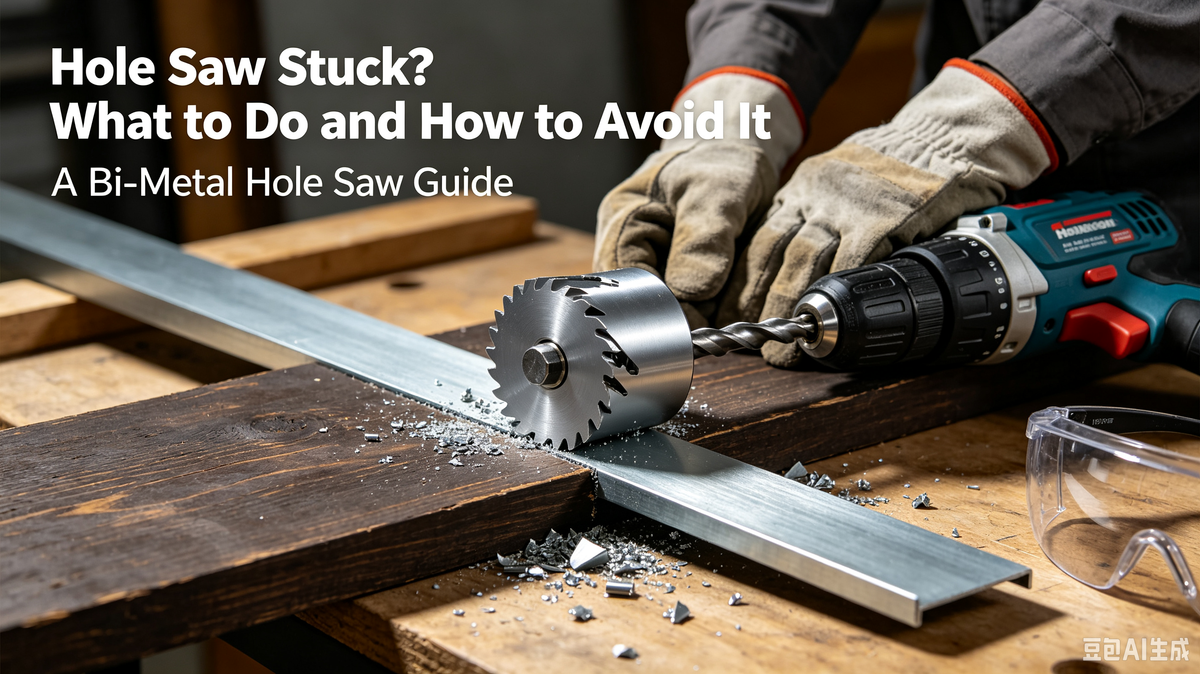

Most People Treat a Hole Saw Like a Disposable Tool — But There Are Two Very Different Kinds
A hole saw looks like just another hole-cutting tool. Plenty of people figure they can grab any cheap one and be fine. But anyone who has actually cut through metal, wood, and plastic knows the gap between a carbon steel hole saw and a bi-metal hole saw is far bigger than it looks. One person went through three sets in a single year before finally settling on a bi-metal hole saw set — and in hindsight, most of those mistakes were avoidable.
If you're searching for things like "which hole saw brand is best," "can a hole saw cut metal," or "bi-metal vs carbon steel hole saw," this should save you some wrong turns.
Three Sets, Three Ways to Fail
Set #1: Carbon Steel, the Cheapest One
The thinking was simple: not much hole-cutting, just the occasional hole in wood, good enough. On wood it was passable — rough cuts, poor chip clearance, but it worked. Then came a hole in sheet metal. "Let's try it." The teeth flattened instantly, there was a burnt smell, and the saw was done. Carbon steel meeting metal is basically a one-time deal.
Set #2: The "Multi-Purpose" Hole Saw Set
The packaging claimed it could cut metal, wood, and plastic. Looked comprehensive. Plastic was fine. Wood was okay. But the moment it hit steel plate, it gave up — wrong tooth geometry, shallow chip clearance grooves, chips packed in tight, the body overheated, and it started smoking in under two minutes. That set got demoted to wood and drywall only.
Set #3: Pilot Bit Seized
Worse still. The pilot bit seized inside the hole, had to be pried out with pliers, and came out bent. All that's left of that set is the case.
Three sets, plenty of money, nothing done properly.
The Real Difference Between Carbon Steel and Bi-Metal
Whether a hole saw works comes down to the teeth.
A carbon steel hole saw has through-hardened teeth — hard enough but brittle. Fine for wood, but against metal it's hard-on-hard, and the teeth either round over or snap off. It's cheap for a reason: it was never designed for metal.
A bi-metal hole saw is built differently: the tooth ring is high-speed steel, the body is spring steel, laser-welded together. The HSS does the cutting, the spring steel provides toughness. The tooth geometry is designed with deeper, wider chip clearance grooves, so metal chips clear out instead of packing in and burning the saw.
In one sentence: carbon steel cutting metal is a question of "can it finish," bi-metal cutting metal is a question of "does it cut clean."
Why It Ended Up Being a Set
Single saws were bought. Sets were bought. In the end, a set is just less hassle.
No guessing sizes. You never know what the next hole needs to be. Today a 25mm conduit hole, tomorrow a 51mm vent hole — buying singles means repeated trips to the hardware store. A set covering 20mm to 68mm means it's already in the box.
No arbor matching. A hole saw is just a ring — it needs an arbor and pilot bit to mount on a drill. Buying singles makes it easy to miss the arbor spec and end up with something that won't fit. Sets usually come with the arbor and adapters ready to go.
No storage headaches. Hole saws loose in a toolbox bang teeth against each other and dull fast. A molded case gives each one its own slot — quick to find, and the teeth stay protected.
The set chosen in the end was M42. M42 is cobalt-bearing high-speed steel — more wear-resistant than standard HSS, runs cooler and lasts longer in stainless. For someone who doesn't use it daily but occasionally has to chew through something hard, that material hits the right balance.
A Few Lessons From Actual Use
Bi-metal is tougher than carbon steel, but that doesn't mean you can abuse it.
Keep the RPM low. This is the most counterintuitive part. Many people assume cutting metal means high speed — with hole saws it's the opposite. Low RPM, steady feed lets the teeth "nibble" their way in. Too fast and the tooth tips overheat instantly — even HSS won't survive. For steel plate, keep the drill around 300–500 RPM.
Don't skip cutting oil. Cutting steel plate dry leaves the tooth tips blue — clearly overheated. A few drops of cutting oil every time makes the cut smoother and extends saw life considerably. Don't let chips pile up — back out every few millimeters, clear them, and re-oil.
Perpendicular matters more than anything. Hand drills wander. Once a hole saw cuts at an angle, tooth loading becomes uneven — at best a rough cut, at worst broken teeth. Start slow, let all teeth contact the material at once, then steady downward.
Never use impact mode. This mistake only needs to happen once. Impact mode cracks the saw blade, and flying fragments are no joke.
Is It Worth It
If you only drill wood, carbon steel is fine — cheap and simple.
But the moment metal shows up in your work — sheet steel, aluminum tube, stainless — bi-metal is unavoidable. It's not a question of "should I upgrade," it's a question of "when."
The biggest change after switching to bi-metal wasn't cutting speed — it was not having to white-knuckle every cut. With carbon steel in sheet metal, every second felt like the saw might die, so the feed was hesitant and choppy — which actually wears the saw faster. Now there's confidence: steady pressure, and it cuts exactly as much as it should.
A reliable bi-metal hole saw set costs several times a single carbon steel saw. But factoring in three wasted sets in a year, it paid for itself long ago.
With tools, the cheap one is always the most expensive.
FAQ
Q: Can a bi-metal hole saw cut stainless steel?
A: Yes, but use a cobalt-bearing M42 tooth, keep RPM low, and apply cutting oil — otherwise the tooth tips will overheat.
Q: What sizes does a hole saw set usually include?
A: Common sets cover 20mm to 68mm — enough for conduit holes up to vent holes. Before buying, confirm the arbor spec matches your drill.
Q: Can a carbon steel hole saw cut metal?
A: Thin sheet metal occasionally, yes — but the teeth dull or snap quickly. For regular metal cutting, bi-metal is mandatory.
Q: What RPM should a hole saw run at?
A: For metal, 300–500 RPM with a steady feed. Higher speeds overheat and destroy the teeth.
Q: Does a hole saw need cutting oil?
A: Yes, for metal. Without it, tooth tips turn blue and soften, dramatically shortening saw life.