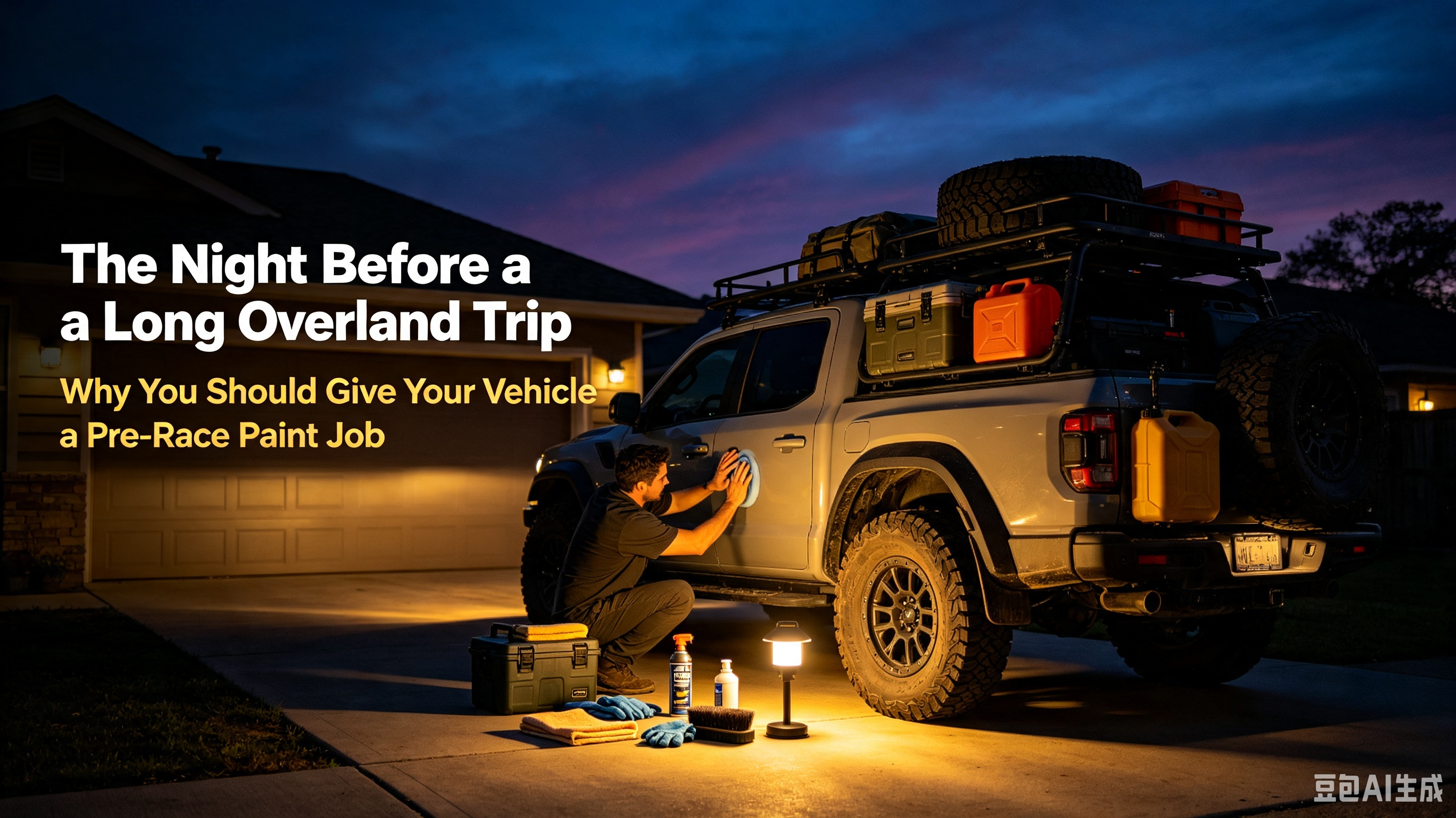

The crossing is over, and the return trip is just ahead. Your car is caked in mud, with a few deep scratches on the side panels. Instead of hitting the highway right away, you spend half a day at camp giving your trusted vehicle a complete once-over. No repair shop needed. No external power source required. A single set of spare batteries is enough to handle all those minor wounds.
This is what a "Camp Tuning Day" means — getting yourself and your car clean, refreshed, and worry-free for the journey home.
Why Schedule a "Camp Tuning Day"?
Many off-road enthusiasts are used to "dealing with it at home." But after off-roading and before heading back is actually your best window to address those vehicle details:
-
Mud Erosion: Mud from off-road trails contains grit and acidic substances. Once it dries and adheres to the paint, underbody, and wheels, it accelerates wear and corrosion.
-
Exposed Scratches: Paint scratched by branches or rocks during the crossing leaves bare metal vulnerable to oxidation within hours in a humid environment.
-
Mental Ritual: This is a transition ceremony from "off-road mode" to "highway mode" — a thorough check-up for your vehicle.
A camp tuning day isn't just about looking good — it's about keeping your car in better condition.
Tool Prep: One Set of Spare Batteries Is All You Need
Traditional deep cleaning and repairs require pressure washers, polishers, and air compressors — almost impossible to use in the wild. But with a Makita 18V-compatible system (battery + spray gun + sander/polisher + vacuum/blower), you've got a mobile tuning workstation right at camp.
What makes this system invaluable:
-
No External Power Needed: No outlets required at camp. One fully charged set of spare batteries (at least 2 x 5.0Ah recommended) is enough to complete the entire process.
-
One Battery, Multiple Tools: The same battery powers the spray gun, handheld vacuum, sander, and blower — reducing equipment redundancy.
-
Lightweight and Portable: All tools fit neatly in a toolbox, taking up minimal trunk space.
Step 1: Clean — Wash That Mud Off
Goal: Remove mud and grit from the body, wheel arches, and underbody to prepare for repairs.
Procedure:
-
Initial Rinse: If camp has a water source, use a portable pressure washer (Makita 18V-compatible) with a bucket of water for a low-pressure rinse. If no water source is available, use a spray bottle (with clean water) to moisten the mud, then gently remove it with a scraper or damp cloth.
-
Detail Brushing: Use a detailing brush with neutral car wash soap to clean tight spots like wheel arches, door gaps, and side mirror folds. These areas trap sand and grit that can wear down paint during the drive home.
-
Blow-Dry the Body: Use a Makita 18V blower to remove residual water from gaps — especially the front grille, headlight edges, and door seals. Trapped moisture accelerates rust formation.
Note: Never rinse a hot surface. Rapid temperature changes can cause paint cracking.
Step 2: Inspect and Sand — Expose the True Damage
Goal: Identify all scratches that need attention. Remove loose paint chips and burrs, and prep the surface for spraying.
Procedure:
-
Scratch Grading:
-
Surface Scratches (clear coat only): Can be polished out.
-
Shallow Scratches (down to primer but not metal): Need touch-up paint.
-
Deep Scratches (metal exposed or rust spots visible): Must be sanded and rust-treated before repainting.
-
-
Sanding Prep: Use a Makita 18V sander (with 120-240 grit sandpaper) to gently sand along the scratch edges, removing loose paint and burrs. Sand slightly beyond the scratch itself for better blending.
-
Rust Treatment: If rust spots are found, use a rust remover or fine sandpaper to gently sand down to bare, shiny metal. Don't skip this — otherwise rust will continue spreading from underneath after repainting.
Step 3: Spray the Anti-Rust Coating — "Stitch Up" Minor Wounds at Camp
Goal: Use a portable spray gun to apply primer and color coat to scratches, creating an effective rust barrier.
Procedure:
-
Clean the Surface: Wipe the sanded area with an alcohol wipe or IPA solution to remove oil and dust. Any contaminants will affect paint adhesion.
-
Masking: Use masking paper and tape to cover areas surrounding the scratch that don't need spraying. Extend masking 5-10 cm beyond the scratch edges.
-
Spray Primer: Use a fully charged Makita 18V-compatible spray gun to apply 2 layers of anti-rust primer over the scratched area (5-7 minute interval between layers). Primer is the core of rust protection — it seals metal from air and moisture.
-
Spray Color Coat: After 20 minutes of drying, apply 2-3 layers of color coat (or touch-up paint matched to your vehicle's color).
-
Spray Clear Coat (Optional): After 30 minutes of drying, apply 1 layer of clear coat for added gloss and protection.
-
Natural Drying: Camp sunlight and a gentle breeze aid curing. After 1-2 hours, remove the masking paper.
Capacity Reference: A fully charged spray gun, paired with a set of spare batteries, is enough to completely repair an entire side panel or wheel arch — sufficient for most minor wounds picked up during a trail run.
Added Value of a Tuning Day: More Than Just Repairs
Beyond cleaning and repairs, a camp tuning day is also a great time to:
-
Inspect Tires: Clear stones from treads and check sidewalls for cuts.
-
Underbody Visual Check: Look for oil leaks, loose skid plates, or dangling lines.
-
Check Lights: Ensure headlights, taillights, turn signals, and fog lights are all working.
-
Mental Shift: Switch your mindset from "off-road mode" to "homebound mode" — and hit the road with peace of mind.
Summary: Next Time You Head Out, Bring a "Tuning Mindset"
The thrill of off-roading lies in exploration and challenge. A camp tuning day is your way of honoring that experience. A fully charged spray gun, a set of spare batteries, and a simple cleaning/sanding kit are all you need to complete a "deep clean + minor repair" cycle before hitting the road.
The next time you finish a crossing, your first move after parking isn't setting up the tent — it's pulling out the toolbox. Because you know that the highway home deserves a clean, well-maintained ride.
Key Action: Before your next trip, check that your Makita 18V batteries are fully charged, bring spare batteries and a portable spray gun, and set aside half a day at camp for your vehicle.