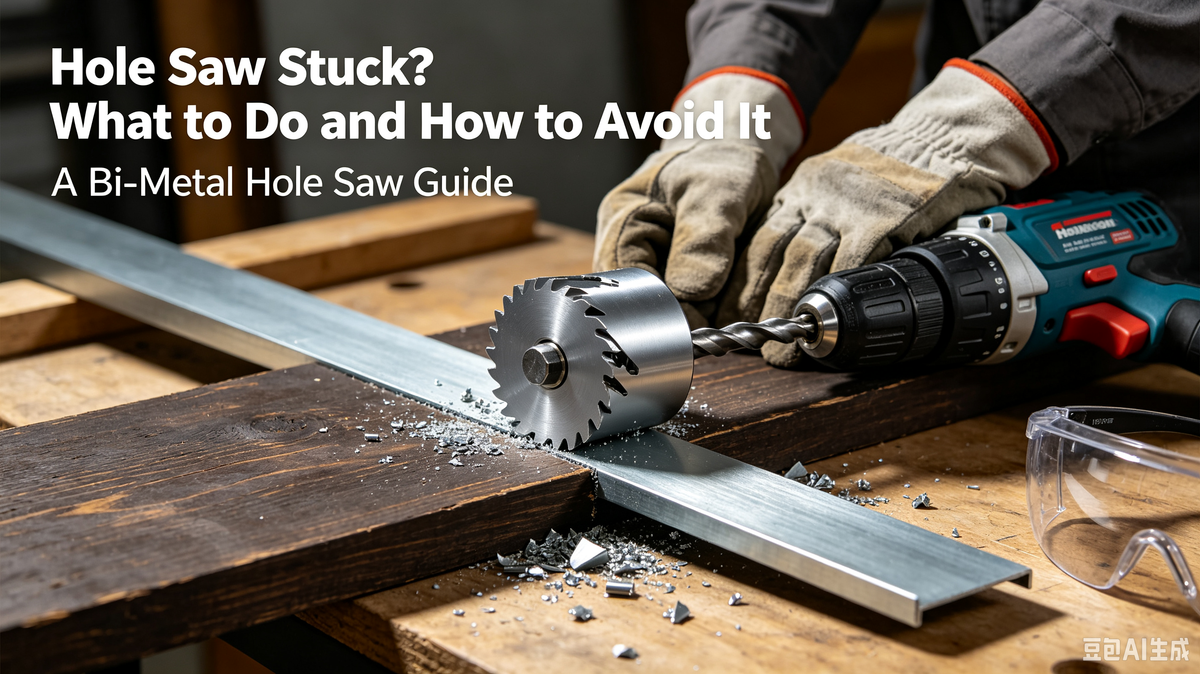

One of the most common questions after buying a bi-metal hole saw kit is: how long does it actually last? After all, a professional hole saw set isn't cheap, and nobody wants to burn through their investment in a few weeks.
But there's no single answer. The same bi-metal hole saw can be destroyed after a dozen holes by one user, while another cuts 500 holes and keeps going. The difference comes down to a few key factors: what you're cutting, how you use it, and the quality of the hole saw itself.
Bi-Metal Hole Saw Lifespan: What the Brands Say
Major hole saw manufacturers publish test data on bi-metal hole saw lifespan, but testing baselines differ.
DEWALT bi-metal hole saws claim 50% longer life than the previous generation, based on cutting black pipe. The DEWALT EXTREME hole saw series claims up to 2x the life of previous models.
Bosch bi-metal hole saws use M42 alloy with 8% cobalt, and Bosch states the lifespan is doubled compared to the previous generation. Some users report that a 50mm Bosch hole saw cut more than 500 holes in 4mm stainless steel before showing partial tooth wear.
Starrett deep-cut bi-metal hole saws completed over 500 cutting tasks in internal lab tests while still maintaining a sharp cutting edge.
Morse M42 cobalt hole saws claim more than twice the life of standard models.
The key takeaway: a quality bi-metal hole saw lasts hundreds of holes, not dozens.
What Affects Bi-Metal Hole Saw Life?
1. Cutting Material: Wood vs. Stainless Steel
This is the single biggest factor affecting hole saw blade life.
Cutting wood, drywall, and plastic causes minimal wear. A hole saw kit can easily cut hundreds of holes in these materials.
Cutting metal, especially stainless steel, is completely different. Stainless steel is hard and conducts heat poorly, so heat concentrates at the tooth tips, causing them to anneal and soften. Wear when cutting stainless steel can be dozens of times faster than cutting wood.
Hole saw lifespan by material:
-
Wood, drywall, plastic: Longest life, hundreds of holes
-
Aluminum, copper: Moderate life, faster wear
-
Iron plate, carbon steel: Shorter life, requires speed control and cooling
-
Stainless steel: Shortest life, must use low speed + cutting fluid
2. Cutting Speed, Pressure, and Cooling
This is the most overlooked factor affecting bi-metal hole saw performance.
Cutting speed: You must use low speed when cutting metal. Too high a speed rapidly heats the tooth tips, causing them to anneal and dull. Many beginners run their drill at full speed into metal and destroy the hole saw in a few holes.
Pressure: Don't force it. Let the teeth cut naturally. Excessive pressure causes tooth chipping or binding.
Cooling and lubrication: Using cutting oil or coolant when cutting metal dramatically lowers temperature and extends life. Data shows proper cooling can extend hole saw life by up to 500%.
Chip evacuation: Chip buildup increases friction and temperature. Clearing chips promptly keeps cutting smooth and extends blade life.
3. Hole Saw Quality: M42 Cobalt vs. Standard HSS
Not all bi-metal hole saws are created equal.
Tooth material: M42 cobalt high-speed steel (8% cobalt) is more wear-resistant and heat-resistant than standard M3 high-speed steel. Cobalt tooth tips maintain hardness at high temperatures, making them ideal for cutting metal.
Tooth geometry: Variable pitch (4/6 teeth per inch) clears chips better, reduces vibration, and lasts longer than uniform pitch.
Body material: Bi-metal construction uses spring steel for the body, offering toughness and crack resistance.
4. Pilot Bit Quality
The pilot bit positions and guides the saw. A dull pilot bit causes slipping and wandering, indirectly affecting hole saw life. Good hole saw kits include replaceable pilot bits.
Bi-Metal Hole Saw Lifespan: Real-World Reference
| Use Case | Estimated Lifespan |
|---|---|
| Occasional wood/drywall cutting (DIY) | Hundreds of holes, may last years |
| Regular wood/plastic cutting (contractor) | 100–300 holes |
| Occasional thin metal cutting | 50–100 holes |
| Regular thick metal/stainless cutting | 20–50 holes |
| Stainless steel (proper use + cooling) | Up to 500+ holes |
| Stainless steel (improper use) | A few holes can ruin it |
How to Tell When a Bi-Metal Hole Saw Needs Replacing
-
Cutting speed drops noticeably
-
You have to push hard to cut
-
Teeth look dull or shiny
-
Cut edges become rough
-
Smoke or discoloration during cutting
How to Extend Bi-Metal Hole Saw Life
-
Use low speed for metal
-
Use cutting fluid (cutting oil or motor oil)
-
Don't force it — let the teeth cut naturally
-
Clear chips promptly
-
Keep the hole saw perpendicular
-
Use separate hole saws for different materials
-
Replace dull pilot bits
FAQ
Q: How long does a bi-metal hole saw last?
A: It depends on the material. For wood and drywall, hundreds of holes. For stainless steel, 20–50 holes with proper use, or up to 500+ with ideal conditions.
Q: Can I use a bi-metal hole saw on stainless steel?
A: Yes, but you must use low speed and cutting fluid. High speed will destroy the teeth quickly.
Q: What is the best hole saw for metal?
A: M42 cobalt bi-metal hole saws offer the best combination of wear resistance and heat resistance for cutting metal.
Q: How do I know when to replace my hole saw?
A: When cutting speed drops, you need to push hard, teeth look shiny, or cut edges become rough.
Q: What is the difference between M3 and M42 hole saws?
A: M42 contains 8% cobalt and is more heat-resistant and wear-resistant than M3 HSS, making it better for cutting metal.
Summary
How long a bi-metal hole saw kit lasts depends on three core factors: what you're cutting, how you use it, and the quality of the hole saw.
If you're only occasionally cutting wood and drywall, a good kit can last years. If you're regularly cutting metal, especially thick steel and stainless, you may need to replace certain sizes within months.
But one thing is certain: a quality bi-metal hole saw lasts far longer than you might expect. With proper use—low speed, cooling, no forcing—a professional hole saw kit can handle hundreds or even thousands of holes. The question isn't just "how long does it last," but "are you using it right."