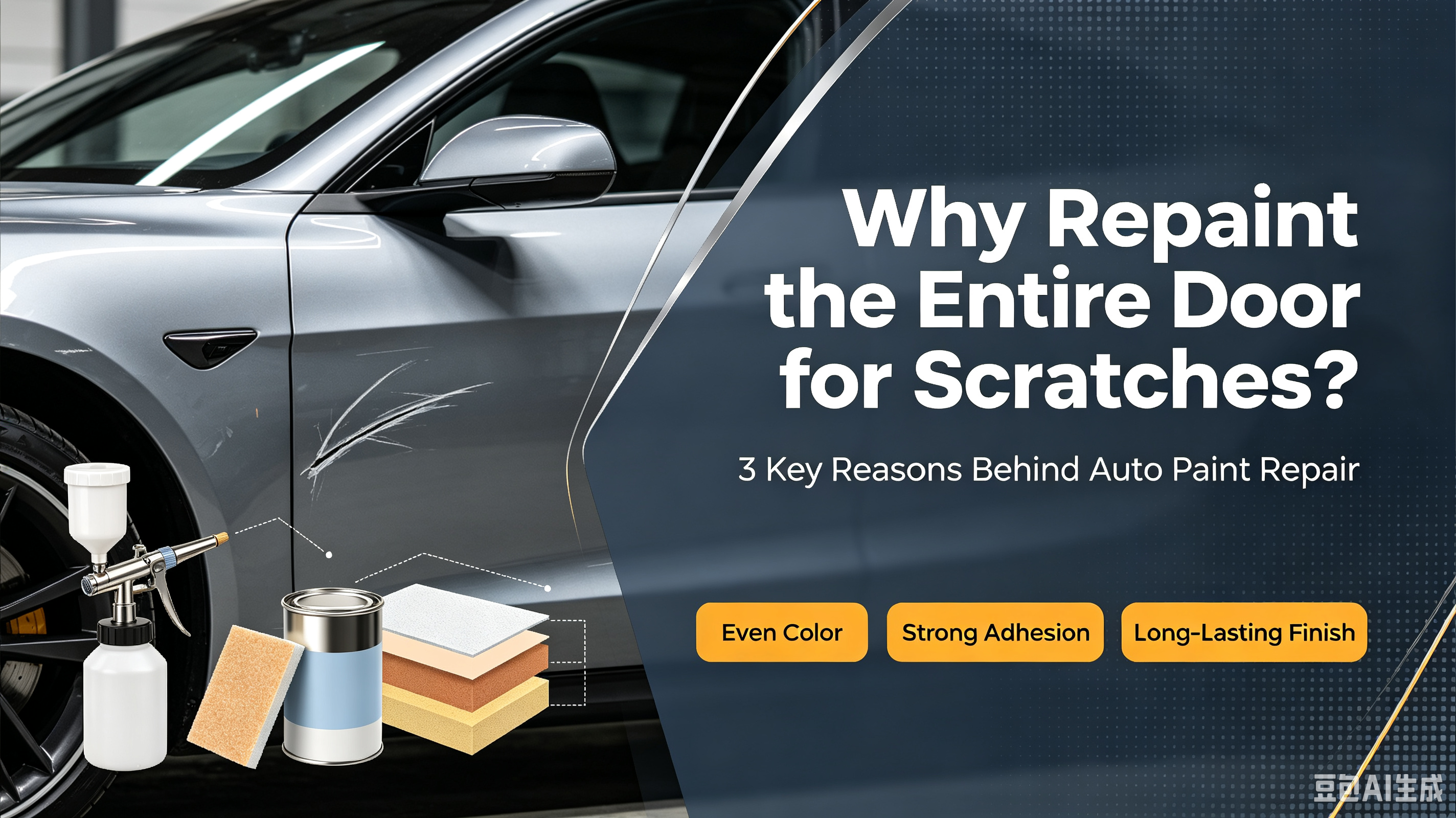

Many car owners hold a common misunderstanding: as long as the repaired car paint looks the same as the original, there is no difference. But the truth is, factory paint and repair paint are never interchangeable. Even the most professional repainting work cannot fully replicate the performance, durability, and value of original factory paint.
If you care about your car’s appearance, service life, and resale value, it’s essential to figure out the core differences between factory paint and repair paint. This article will break down their gaps in production technology, structural composition, performance, and practical value in detail.
1. Fundamental Production Process: Night and Day
The biggest gap between factory paint and repair paint lies in the construction environment and curing process, which determines their essential differences.
Factory Paint: High-temperature Integrated Molding
Original factory paint is applied on the bare car body before the assembly of any parts, interiors, and electronic components. The entire construction is completed in a fully enclosed, dust-free automated workshop. The whole car body undergoes professional pretreatment such as phosphating and electrophoretic immersion first, forming a tight anti-corrosion base layer.
Subsequently, robotic arms complete uniform, precise spraying of intermediate paint, color paint, and clear coat layer by layer. Finally, the entire car body is baked at a high temperature of 130℃ to 180℃ for integrated curing. This high-temperature baking process fuses the paint molecules with the steel body tightly, achieving ultra-strong adhesion and overall uniformity.
Repair Paint: Low-temperature Manual Remediation
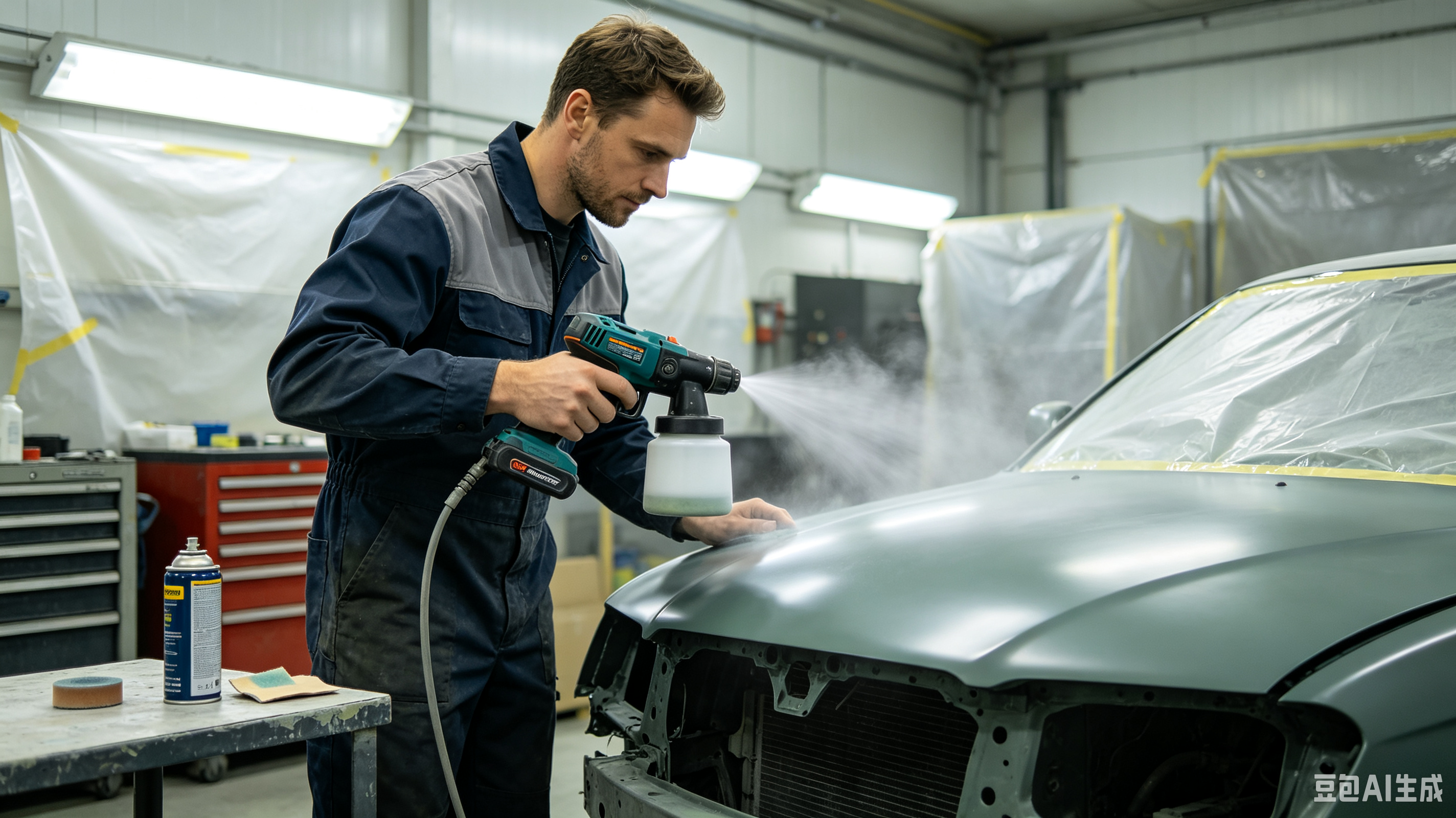
Car repair and repainting are carried out on fully assembled vehicles. A large number of plastic parts, rubber parts, circuits, and interior decorations on the car cannot withstand high temperatures above 100℃. Therefore, repair paint can only adopt low-temperature baking (about 60℃-80℃) or natural air-drying technology.
Moreover, most repair workshops cannot reach the strict dust-free level of factory workshops. Manual spraying is easily affected by human operation, resulting in uneven paint thickness, tiny dust particles, and irregular orange peel texture on the painted surface. No matter how exquisite the craftsmanship is, it can only achieve "visual similarity", not "consistent essence".
2. Paint Layer Structure: Integrated Superimposition vs. Local Patching
The service life and anti-corrosion ability of car paint depend on the complete coating structure, and this is another key point where repair paint falls behind factory paint.
Complete 6-layer Structure of Factory Paint
The original factory paint forms a complete and tight protective system from the inside out: galvanized steel plate → phosphating anti-rust layer → electrophoretic primer → middle coating → color base paint → transparent clear coat. Each layer is closely combined through high-temperature curing, which can effectively isolate air and moisture, realizing long-term anti-corrosion and anti-rust protection for the car body. Excellent factory paint technology can even ensure the car body does not rust through for more than ten years.
Simplified Structure of Repair Paint
During repainting maintenance, workers can only polish and strip the local damaged paint surface, then spray primer, color paint and clear coat locally. It is impossible to re-do the factory’s integral phosphating and electrophoretic anti-corrosion treatment. The layered fit and compactness of the repair paint are far lower than the original paint, and the local patched structure cannot form an overall protective system, leaving hidden dangers of peeling, blistering and rusting in the later stage.
3. Comprehensive Performance: Durability and Weather Resistance Are Greatly Different
Due to the differences in process and structure, factory paint and repair paint show obvious gaps in daily use performance.
· Hardness and Scratch Resistance: High-temperature cured factory paint has high paint film density and hardness, which can resist daily slight scratches from washing and friction. Low-temperature repair paint has a looser molecular structure, softer paint surface, and is more prone to fine scratches and paint fading.
· Weather Resistance and Anti-aging: Factory paint can resist ultraviolet radiation, high temperature, rain and acid corrosion for a long time, with slow color fading and no obvious color difference for many years. Repair paint is prone to oxidation, yellowing and color fading after 2-3 years of use, and the color difference with the original car paint will gradually become obvious.
· Adhesion and Firmness: The integrated high-temperature molding of factory paint makes the paint film and the car body integrated, not easy to peel off. The repair paint only adheres to the surface of the original paint, with limited adhesion, and is easy to crack and peel off under the influence of temperature changes and external impact.
4. Car Resale Value: Original Paint Is the Core Premium Point
In the used car market, full original factory paint is an important standard for judging a car’s condition and value. Professional used car appraisers can quickly identify repainted parts through paint thickness gauges and surface texture observation.
A car with all-original paint means no major scratches, no sheet metal deformation, and no hidden rust risks in the body, so it can maintain a higher resale premium. Once the original paint is destroyed and replaced with repair paint, even if the repair effect is perfect, the car’s resale value will still drop significantly. Partial repainting will affect the valuation, while large-area repainting will even make buyers suspect accident risks.
5. Should You Repair Paint? Rational Suggestions for Car Owners
We emphasize the value of factory paint, not to let car owners refuse all paint repairs, but to treat paint damage rationally:
· For minor surface scratches that do not hurt the primer: Do not rush to repaint. You can solve the problem through polishing and glaze sealing to retain the original factory paint to the greatest extent.
·For scratches that expose the primer or steel plate: Timely professional repair is necessary. Although repair paint is not as good as factory paint, it can effectively prevent the steel body from rusting and avoid more serious body damage.
Avoid blind high-price "original paint repair": There is no real factory paint repair in the aftermarket. All so-called "original paint formula" and "factory-level paint" are improved repair paints, which cannot replicate the factory’s high-temperature integrated process.
Final Conclusion
Factory paint is a one-time integral molding technology of automobile production, which is irreproducible and irreplaceable. Repair paint is only a remedial measure for later paint damage. They are completely different in process, structure, performance and value.
Protecting the original factory paint is the most cost-effective maintenance for your car. Next time when your car has paint damage, please remember: don’t repaint blindly, keep your original paint as much as possible, and scientifically repair only when necessary!